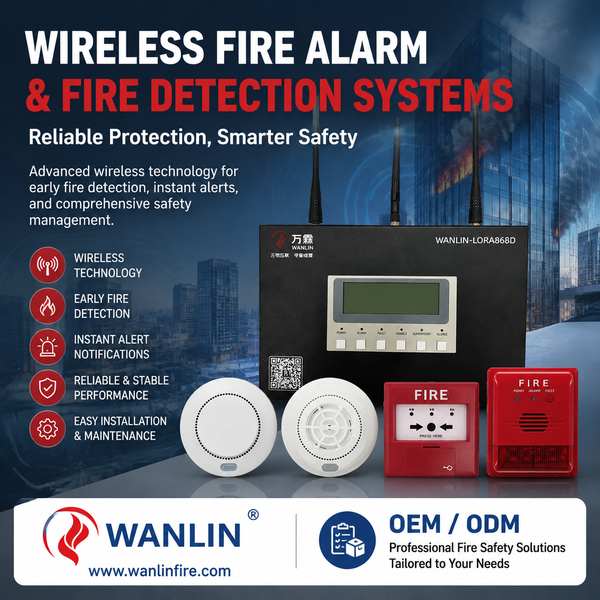

Wireless temperature sensing detector
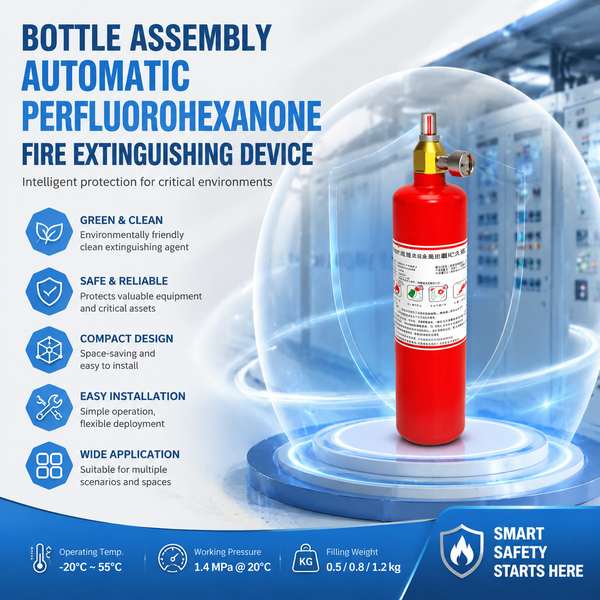
perfluorohexanone fire extinguishing system trial order: Clean Agent Fire Protection by Wanlin Fire
- Release Date:2026-08-13
- Product Description:Wanlin Fire Control — China's leading source manufacturer of perfluorohexanone fire extinguishing system trial order. FK-5-1-12 / Novec 1230 clean agent systems, zero ODP, GWP 1. UL, FM, CE, EN certified. 15+ years export to 60+ countries. Contact +8613261677119.
- Consult Now
The fire suppression industry is undergoing its most significant transformation since the Montreal Protocol banned ozone-depleting halons. At the center of this transformation is perfluorohexanone — a fluorinated ketone clean agent (chemical formula C6F12O, IUPAC name perfluoro-2-methyl-3-pentanone) commercialized by 3M as Novec 1230 and standardized as FK-5-1-12 under ISO 14520. Perfluorohexanone represents the culmination of decades of clean agent evolution: it delivers the rapid, equipment-safe fire suppression of halon 1301, without halon's catastrophic environmental impact, and it offers the fire-fighting performance of HFC-227ea (FM-200), without that agent's global warming burden.
The environmental credentials are decisive. Perfluorohexanone has a global warming potential (GWP) of just 1 — versus 3,220 for HFC-227ea and over 6,000 for halon 1301 — and zero ozone depletion potential (ODP). Its atmospheric lifetime is approximately 5 days, meaning it breaks down naturally within days rather than persisting for decades. Under the Kigali Amendment to the Montreal Protocol and the EU F-Gas Regulation, high-GWP HFCs are being phased down globally, and perfluorohexanone — as the leading low-GWP clean agent — is the natural replacement. This regulatory tailwind, combined with perfluorohexanone's technical superiority for protecting electronic equipment, is driving a structural shift in the fire suppression market that will define the industry for the next two decades.
Wanlin Fire Control stands at the forefront of this transformation. As a source manufacturer with 15+ years of fire protection expertise, we design, manufacture, and export the complete perfluorohexanone ecosystem — from agent supply and portable extinguishers to cabinet-type, fire-detection-tube, suspended, modular, and engineered piping-network systems — serving distributors, integrators, and fire protection companies in 60+ countries. perfluorohexanone fire extinguishing system trial order represents exactly the kind of environmentally advanced, technically superior fire protection that is powering the global transition to sustainable clean agent solutions.
II. Perfluorohexanone Technology: The Engineering Foundation
Perfluorohexanone's technical properties make it uniquely suited to modern fire protection challenges. Its 49C boiling point means it is stored as a liquid at room temperature — enabling compact, low-pressure cylinders far smaller than the high-pressure vessels required for inert gases. Its non-conductivity (2.3x the dielectric strength of air) makes it safe for energized electrical equipment. Its residue-free, non-corrosive nature protects both the equipment being safeguarded and the piping network itself. And its low toxicity (NOAEL 10% versus design concentration 4-6%) makes it safe for occupied spaces — a critical advantage over CO2.
Key Technology Characteristics:
- Perfluorohexanone (FK-5-1-12 / Novec 1230) Agent: Chemical formula C6F12O (perfluoro-2-methyl-3-pentanone), molecular weight 316.04 g/mol, zero ozone depletion potential (ODP = 0), global warming potential of 1 (GWP = 1), atmospheric lifetime approximately 5 days, boiling point 49.2C (liquid at room temperature), freezing point -108C, liquid density 1.6 g/cm3, vapor density ~11 (heavier than air), dielectric strength 2.3x that of air (non-conductive), low toxicity (NOAEL 10%, design concentration 4-6%), residue-free and non-corrosive — the most environmentally advanced clean agent commercially available.
- Extinguishing Mechanism: Dual-action fire suppression — (1) heat absorption (physical cooling) through high heat capacity and rapid vaporization at 49C boiling point, drawing heat from the flame zone; (2) chemical inhibition through free radical interruption of the combustion chain reaction (the halon principle, without ozone-depleting chlorine/bromine). This dual mechanism achieves rapid extinguishment within seconds at design concentrations of just 4-6%.
- Cabinet-Type (Indirect) Systems: Self-contained perfluorohexanone units for single enclosures (server cabinets, electrical cabinets, control cabinets, battery modules). Available in capacities from small cabinet units to multi-zone configurations. Stored-pressure design with nitrogen pressurization, electric or thermal actuation, and optional fire detection tube integration. Ideal for targeted protection of high-value equipment enclosures.
- Fire Detection Tube (FDT) Systems: Flexible heat-sensing polymer tube that serves as both detection element and discharge path — the tube is pressurized and routed through the protected space; when heated to activation temperature (typically 100-180C), it ruptures at the hottest point and discharges agent directly at the fire source. Fully mechanical operation (no electrical power required), ideal for enclosed equipment, CNC machines, electrical cabinets, battery modules, and engine compartments.
- Suspended (Ceiling-Mounted) Systems: Hanging perfluorohexanone devices for smaller protected spaces and spot protection. Available in multiple capacities, with thermal or electric activation, and optional integrated detection. Ideal for small rooms, storage areas, and localized protection where cabinet or engineered systems are impractical.
- Piping Network (Engineered) Systems: Centralized perfluorohexanone systems for larger protected spaces — storage cylinders, selector valves, distribution piping, and multiple discharge nozzles protecting multiple zones. Engineered with detailed hydraulic calculation per NFPA 2001, ISO 14520, and EN 15004 to ensure even agent distribution within the required 10-second discharge time. Ideal for data center halls, large server rooms, and multi-zone facilities.
- Modular Systems: Scalable perfluorohexanone units for mid-sized spaces, combinable to protect larger areas. Available in stored-pressure and non-stored-pressure configurations, with electric, thermal, or fire detection tube activation. Flexible deployment for growing facilities where protection needs evolve.
- Portable/Handheld Extinguishers: Perfluorohexanone fire extinguishers for spot protection and first response. Available in various capacities, with UL, CE, FM, and EN certification options. Non-conductive and residue-free for safe use on energized electrical equipment and sensitive electronics. Ideal for server rooms, laboratories, and high-value equipment areas.
Wanlin Perfluorohexanone Product Portfolio:
- Fire Detection Tube (FDT) Systems — self-contained, mechanical (no-power) units for enclosed equipment: server racks, electrical cabinets, CNC machines, battery modules. The heat-sensing tube detects and discharges simultaneously.
- Cabinet-Type (Indirect) Systems — self-contained units for server cabinets, control cabinets, and electrical enclosures. Electric or thermal actuation, various capacities.
- Suspended (Ceiling-Mounted) Systems — hanging devices for smaller protected spaces and spot protection.
- Modular Systems — scalable units for mid-sized spaces, combinable for growing facilities.
- Piping Network (Engineered) Systems — centralized systems for large spaces (data center halls, server rooms), with storage cylinders, selector valves, and multi-zone distribution.
- Portable/Handheld Extinguishers — for spot protection and first response on sensitive equipment.
- Agent Supply — perfluorohexanone agent in drums and cylinders for system charging, refilling, and retrofit projects.
III. The Wanlin Advantage: Your Perfluorohexanone Manufacturing Partner
In the clean agent fire suppression market, the choice of manufacturer determines not just product cost, but system reliability, certification compliance, and your ability to serve demanding customers. Here's why fire protection companies in 60+ countries choose Wanlin:
1. True Manufacturing — Complete System Capability
Wanlin is a genuine source manufacturer, not a trading company. Our ISO 9001 certified facility produces: pressure vessels (cylinders) with in-house design approval and hydrostatic testing, precision-machined valves, electronic control panels, detection devices, and complete system integration. We control the entire production chain, ensuring consistent quality and enabling factory-direct pricing typically 25-40% below Western brand equivalents.
2. Environmental Leadership — The Future-Proof Clean Agent
Perfluorohexanone's zero ODP and GWP 1 profile positions your business for the regulatory future. As HFC-227ea and halon face phase-down, perfluorohexanone offers your customers a compliant, sustainable solution. This environmental advantage translates directly into business value: green building certifications (LEED, BREEAM), ESG compliance, and insurance premium reductions for your clients.
3. Certification Breadth — Market Access Guaranteed
Wanlin systems comply with NFPA 2001, ISO 14520, EN 15004, UL 2166/2129, and FM 5600. Certifications available: UL listed, FM approved, CE marked, EN certified, VdS (Germany), LPCB (UK), CCCF/CCC (China), IMO and classification society approvals (DNV, LR, BV, ABS for marine), ATEX/IECEx (hazardous areas), and 20+ country-specific approvals. Complete certification documentation with every system.
4. Engineering Support — From Design to Commissioning
Our 50+ engineer team provides complete application engineering: system design, design concentration and agent quantity calculations, piping design, hydraulic calculations (NFPA 2001 and ISO 14520), and approval support. We provide design review, documentation, and on-site commissioning support — enabling you to serve complex projects with confidence.
5. Partner-First Business Model
Wanlin is 100% B2B — we do not sell directly to end users outside China. We protect your customer relationships, provide exclusive territory rights, and offer OEM/ODM customization. We invest in your technical training and marketing support because your success is our business model.
IV. High-Growth Application Markets: Where Perfluorohexanone Demand Is Surging
Several convergent market forces are driving rapid perfluorohexanone adoption across diverse applications:
Market Driver 1: Data Center and Cloud Computing Expansion
The AI and cloud computing boom is driving massive data center construction — global data center capacity is growing 20%+ annually. Every data center requires clean agent fire suppression, and perfluorohexanone's non-conductive, residue-free, occupied-space-safe properties make it the agent of choice. This is the largest and fastest-growing application segment, creating sustained demand for cabinet-type, FDT, and engineered perfluorohexanone systems.
Market Driver 2: Energy Storage and Battery Fire Protection
Lithium battery energy storage — from utility-scale BESS to residential systems — is growing 30%+ annually. Battery thermal runaway requires specialized fire protection, and perfluorohexanone (combined with early detection) is increasingly specified for battery cabinet and container protection. This emerging segment represents a significant new market opportunity.
Market Driver 3: HFC and Halon Replacement (Regulatory-Driven)
The Kigali Amendment and EU F-Gas Regulation are phasing down high-GWP HFCs, and legacy halon systems continue to be retired. The large installed base of HFC-227ea and halon systems creates a substantial retrofit market — converting existing systems to perfluorohexanone. This regulatory-driven demand is particularly strong in Europe and North America.
Market Driver 4: Cultural Heritage and Sustainability Protection
Museums, archives, libraries, and heritage institutions increasingly specify perfluorohexanone because of its residue-free, non-corrosive protection of irreplaceable artifacts. Combined with ESG and green building requirements favoring its environmental profile, this segment is growing steadily.
Market Driver 5: Renewable Energy and New Infrastructure
Solar inverters, wind turbine nacelles, EV charging stations, and hydrogen facilities all require clean agent protection for electrical fire risk. Perfluorohexanone's non-conductive properties and compact systems make it ideal for these distributed, often unattended applications.
V. Frequently Asked Questions from Global Fire Protection Partners
Q1: How does perfluorohexanone extinguish fire — what is the extinguishing mechanism?
A: Perfluorohexanone extinguishes fire through two combined mechanisms. (1) Heat absorption (physical): perfluorohexanone has a high heat capacity, and when discharged it rapidly absorbs heat from the fire, cooling the flame zone below the combustion temperature. Its rapid vaporization (boiling point 49C) draws significant heat from the fire. (2) Chemical inhibition (chemical): the fluorinated ketone molecule decomposes in the flame, releasing free radicals that interrupt the combustion chain reaction — the same principle that made halon so effective, but without halon's ozone-depleting chlorine/bromine. The combination of physical cooling and chemical inhibition makes perfluorohexanone highly efficient: typical design concentration is just 4-6%, and extinguishment occurs within seconds. This dual mechanism is why perfluorohexanone achieves rapid suppression with minimal agent quantity — translating to smaller, lighter, and more cost-effective systems than inert gas alternatives.
Q2: What are the physical properties of perfluorohexanone (boiling point, density, pressure)?
A: Key physical properties of perfluorohexanone (FK-5-1-12): Chemical formula C6F12O; molecular weight 316.04 g/mol; boiling point 49.2C (at 1 atm); freezing point -108C; critical temperature 168.7C; critical pressure 18.65 bar; liquid density approximately 1.6 g/cm3 at 25C (significantly denser than water); vapor density approximately 11 (about 11 times heavier than air); vapor pressure approximately 0.404 bar at 25C; dielectric strength approximately 2.3 times that of air (non-conductive); atmospheric lifetime approximately 5 days. The critical design insight: because perfluorohexanone is a liquid at room temperature (boiling point 49C), it can be stored in relatively compact, low-pressure cylinders — unlike inert gases which require large, high-pressure (150-300 bar) storage vessels. This means: smaller storage footprint, lower cylinder cost, easier transportation and installation, and reduced structural load on buildings. The high liquid density also means more extinguishing agent per unit volume than gaseous agents.
Q3: How does perfluorohexanone compare to HFC-227ea (FM-200)?
A: The comparison is decisive in favor of perfluorohexanone for new installations. Environmental: perfluorohexanone GWP = 1, atmospheric lifetime 5 days; HFC-227ea GWP = 3,220, atmospheric lifetime 33 years. Under the EU F-Gas Regulation and Kigali Amendment, HFC-227ea is being phased down and is increasingly restricted for new installations in Europe — perfluorohexanone faces no such restrictions. Safety: perfluorohexanone NOAEL 10%, design concentration 4-6%, wide safety margin for occupied spaces; HFC-227ea NOAEL 9%, design concentration 7-8.7%, narrower margin. Storage: perfluorohexanone is liquid at room temperature (49C boiling point), stored at lower pressure with smaller cylinders; HFC-227ea is stored as a pressurized liquefied gas requiring higher pressure. Extinguishing: both are efficient halocarbon clean agents with similar discharge times (10 seconds), but perfluorohexanone's design concentration is lower. Cost: perfluorohexanone has a higher per-kilogram cost, but lower required quantity and smaller storage requirements often offset this — total system cost is typically comparable, and the environmental compliance advantage makes perfluorohexanone the future-proof choice. For existing HFC-227ea systems, Wanlin provides retrofit solutions for conversion to perfluorohexanone.
Q4: How does perfluorohexanone compare to inert gas systems (IG-541, IG-55, IG-100) and CO2?
A: Each agent type has distinct trade-offs. Inert gases (IG-541 = 52% N2 + 40% Ar + 8% CO2): advantages — truly zero GWP, zero ODP, abundant and inexpensive. Disadvantages — extremely high storage pressure (150-300 bar) requiring large, heavy cylinders; design concentration 35-50% (vs. 4-6% for perfluorohexanone) requiring 10x more storage volume; slower discharge; potential oxygen displacement requiring careful occupied-space management; large piping diameters. CO2: advantages — very low cost, readily available, fast extinguishing. Disadvantages — lethal at extinguishing concentrations (34%+), requiring mandatory pre-discharge alarms and evacuation (cannot be used in occupied spaces without significant safety measures); produces asphyxiation risk; high pressure (55 bar); cold discharge can cause thermal shock. Perfluorohexanone: design concentration 4-6% (small storage), low storage pressure (25-42 bar), safe for occupied spaces, non-conductive and residue-free, compact footprint, but higher agent cost per kilogram. For protecting occupied spaces with valuable electronic equipment — data centers, control rooms, archives, museums — perfluorohexanone offers the optimal balance of safety, compactness, and equipment protection. Inert gases suit large unoccupied spaces; CO2 suits unoccupied industrial applications where cost is paramount and evacuation is acceptable.
Q5: What is the typical design and engineering process for a perfluorohexanone system?
A: Wanlin provides complete engineering support through the system design process. (1) Requirements analysis: protected space volume, fire load, occupancy status, environmental conditions, and applicable standards (NFPA 2001, ISO 14520, EN 15004). (2) Design concentration calculation: based on fuel type and standard requirements — typically 4-6% for most Class A/B fires. (3) Agent quantity calculation: determined by protected volume, design concentration, altitude correction, and temperature correction factors per the applicable standard. (4) System configuration: number and type of cylinders, manifold layout, selector valves, piping network design, nozzle selection and placement. (5) Hydraulic calculation: piping diameter and pressure drop analysis to ensure even agent distribution within the required 10-second discharge time. (6) Detection and control: detector selection, control panel configuration, alarm and abort functions, and integration with building fire alarm. (7) Documentation: complete design drawings, hydraulic calculation reports, bill of materials, and compliance documentation. Wanlin's engineering team provides all calculations and drawings in English, and offers design review and approval support for your local authority.
Q6: What is the refilling, recovery, and maintenance process for perfluorohexanone systems?
A: Complete lifecycle support is critical for clean agent systems. Refilling: after discharge, the system must be refilled with agent — Wanlin supplies perfluorohexanone agent in drums and cylinders for refilling, and provides refilling equipment and procedures. The agent is recovered, recycled, or replenished depending on condition. Recovery: spent agent is recovered and either reconditioned for reuse or properly disposed of — perfluorohexanone's environmental profile simplifies disposal compliance. Maintenance and inspection: NFPA 2001 and ISO 14520 require — semi-annual visual inspection, annual functional testing, periodic weighing of cylinders (agent quantity verification via weight loss measurement — perfluorohexanone systems use liquid level or weight monitoring), pressure gauge checks, and 5-year hydrostatic testing of cylinders. Wanlin provides: complete maintenance manuals, inspection checklists, spare parts, and training for your service technicians. Annual inspection services and maintenance contracts can be structured through our partner network to create recurring revenue for distributors.
Q7: What applications are driving the fastest growth in perfluorohexanone demand?
A: Several high-growth applications are accelerating perfluorohexanone adoption. (1) Data centers and cloud computing: the AI boom is driving massive data center construction, each requiring clean agent fire suppression — data center fire protection is the largest and fastest-growing segment. (2) Energy storage systems (ESS/BESS): lithium battery energy storage — from utility-scale stations to residential systems — requires specialized fire suppression for thermal runaway risk; perfluorohexanone is increasingly specified for battery cabinet and container protection. (3) EV charging infrastructure: charging stations and battery swap facilities require fire protection for electrical fire risk. (4) Renewable energy: solar inverter cabinets, wind turbine nacelles, and hydrogen facilities all require clean agent protection. (5) Heritage and cultural protection: museums, archives, and libraries increasingly specify perfluorohexanone because of its residue-free, non-corrosive properties protecting irreplaceable artifacts. (6) Halon and HFC-227ea replacement: existing installations reaching end-of-life or facing regulatory phase-down create a large retrofit market. Wanlin provides application-specific system designs and certifications for each of these verticals.
Q8: What is perfluorohexanone's role in lithium battery and energy storage fire protection?
A: Lithium battery thermal runaway presents unique fire protection challenges that perfluorohexanone addresses effectively. The challenge: lithium-ion batteries can experience thermal runaway — a self-sustaining exothermic reaction that can reignite even after initial suppression, and can propagate cell-to-cell. Conventional suppression may not prevent re-ignition because the battery continues generating heat. Perfluorohexanone's role: (1) rapid fire suppression of initial flame, (2) cooling of the battery module through heat absorption (reducing propagation risk), (3) its non-conductive, residue-free properties protect the intact battery cells and associated electronics from secondary damage, (4) combined with early detection (off-gas detection, temperature sensing) it provides the fastest response. Wanlin's energy storage fire suppression solutions typically combine: perfluorohexanone suppression with early thermal/off-gas detection, fire detection tube or modular cabinet systems, and integration with the BMS (battery management system). For utility-scale BESS, perfluorohexanone cabinet-type and piping network systems protect battery containers; for residential systems, compact modular units are used. Wanlin provides complete energy storage fire protection solutions compliant with emerging international standards for battery safety.
VI. Partner Success: Hyperscale Data Center Perfluorohexanone with Seismic Design
Partner: Nippon Data Center Systems KK | Location: Tokyo, Japan
Nippon Data Center Systems provides fire protection for Japan's hyperscale data centers, where seismic resilience is a critical design requirement. A major hyperscale operator commissioned fire protection for a new 10,000 m2 data center in Tokyo, requiring: perfluorohexanone clean agent (for F-Gas compliance and equipment protection), seismic-resistant system design (Japan's earthquake standards), NFPA 2001 compliance, and 24/7 operation support. Wanlin provided a complete engineered perfluorohexanone solution with seismic design considerations: seismic bracing for cylinders and piping, flexible connections to absorb earthquake movement, and redundant detection/control systems. Wanlin's engineering team collaborated with Nippon's seismic specialists to validate the system's performance under earthquake conditions. The perfluorohexanone system's compact storage (liquid at room temperature) simplified seismic design compared to high-pressure inert gas systems. The project protected 10,000 m2 across multiple zones. Nippon Data Center Systems has standardized perfluorohexanone for their hyperscale clients, citing the agent's environmental profile and the system's seismic compatibility as key advantages. The project demonstrated that perfluorohexanone systems can meet Japan's most stringent seismic and fire safety requirements.
This case study demonstrates the Wanlin partnership model: providing complete perfluorohexanone systems, engineering support, certification compliance, and technical training that enable fire protection companies to serve demanding projects — from data centers and energy storage to heritage protection and industrial facilities. Whether you're a distributor entering the clean agent market, a system integrator seeking a reliable manufacturer, or a fire protection company expanding your service offerings, Wanlin provides the products, expertise, and partnership commitment to help you succeed.
VII. Partnership and Cooperation Models
Wanlin Fire Control offers flexible partnership structures matching your business model:
Authorized Distributor
For: Established fire protection equipment distributors with existing customer relationships.
Benefits: Exclusive territory rights, tiered volume pricing, engineering support, certification documentation, co-marketing, and technical training.
Requirements: Annual minimum purchase (negotiable), quarterly reporting.
System Integrator Partner
For: Fire protection engineering companies and system integrators.
Benefits: Project-based pricing, complete engineering support (design, calculation, approval), on-site commissioning support, and extended payment terms.
Requirements: Project registration, certified technician training.
OEM/ODM Partner
For: Companies building their own perfluorohexanone product brand.
Benefits: Custom branding, system configuration customization, certification with your brand, custom documentation and packaging.
Requirements: MOQ per product, shared certification costs.
Strategic Alliance
For: Large fire protection companies, government contractors, and multinational distributors.
Benefits: Dedicated engineering team, joint product development, customized supply agreement, priority allocation.
Requirements: Multi-year agreement, volume commitment.
Partner with Wanlin Fire Control — Your Perfluorohexanone Fire Protection Manufacturer
Email: wanlinfirecontrol@163.com
International Export Hotline: +8613261677119
Website: www.wanlinfire.com
15+ Years | 60+ Countries | ISO 9001 | NFPA 2001 · ISO 14520 · UL · FM · CE Certified
VIII. Conclusion: Lead the Clean Agent Transition with Wanlin Perfluorohexanone
The fire suppression industry stands at a historic inflection point. The global phase-down of high-GWP HFCs and the retirement of legacy halon systems have created an unprecedented market opportunity for low-GWP clean agents — and perfluorohexanone is the clear leader. Its combination of zero ODP, GWP 1, non-conductivity, residue-free protection, occupied-space safety, and compact liquid storage makes it the technically superior and environmentally future-proof choice for a vast range of applications.
For fire protection companies, distributors, and system integrators, the strategic imperative is clear: establish perfluorohexanone capability now, and you position yourself for a decade of regulatory-driven demand growth across data centers, energy storage, industrial facilities, cultural heritage, and renewable energy. Wanlin Fire Control provides the complete foundation — certified systems, engineering expertise, and genuine partnership — to help you capture this opportunity.
The technology is proven. The certifications are in place. The market is accelerating. The only question is: will your business lead the clean agent transition?
Your Fire Protection Business Deserves the Future-Proof Clean Agent.
Contact wanlinfirecontrol@163.com today to begin the conversation.